
Branding vs. marketing: the Brand Racing Grid
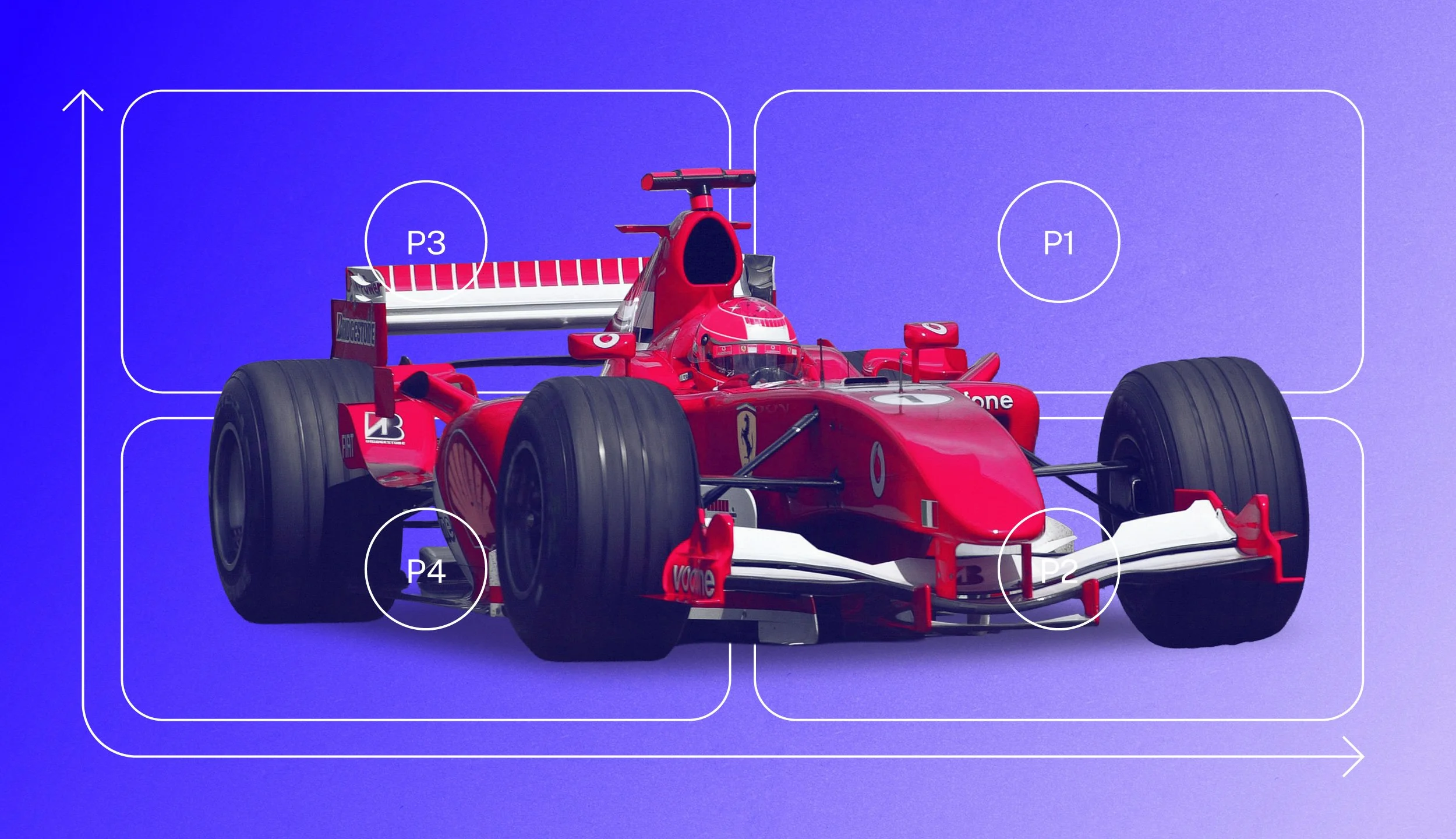
👉 Watch the video this article is based on
Some years ago, a crack appeared on the wall in my stairwell. I patched it with spackle and it looked good at first, but soon the crack reappeared.
I patched it again, and it came back again.
Turns out the house was sinking—it was a foundation issue, showing up as a crack in the wall. Fixing the surface would never solve the problem.
That's what happens when you try to fix a brand problem with marketing.
In my experience working with business owners, marketing is the first thing people reach for when growth stalls, and the first thing that gets blamed when it doesn't work. But when the real problem runs deeper, more marketing just keeps you patching the wall.
To make sense of what's actually going on, I developed a framework called the Brand Racing Grid.
Your brand is the car. Your marketing is the driver.
Think of running your business like running a Formula 1 team.
The car is your brand.
Ideally, it’s engineered and designed to give you every possible advantage.
The driver is your marketing.
They know how to read the track, time their moves, and pull ahead through skill and instinct.
Both are essential. But they're not interchangeable. A rookie driver won't win in even the fastest car, and Lewis Hamilton won't win in a Prius. Your brand and marketing each have a job, but one can't fully compensate for the other.
The four grid positions
In the Brand Racing Grid, "fast" means strong and "slow" means weak—for both your brand and your marketing. That gives you four positions your brand can be in, each reflecting a different state of your branding and marketing:
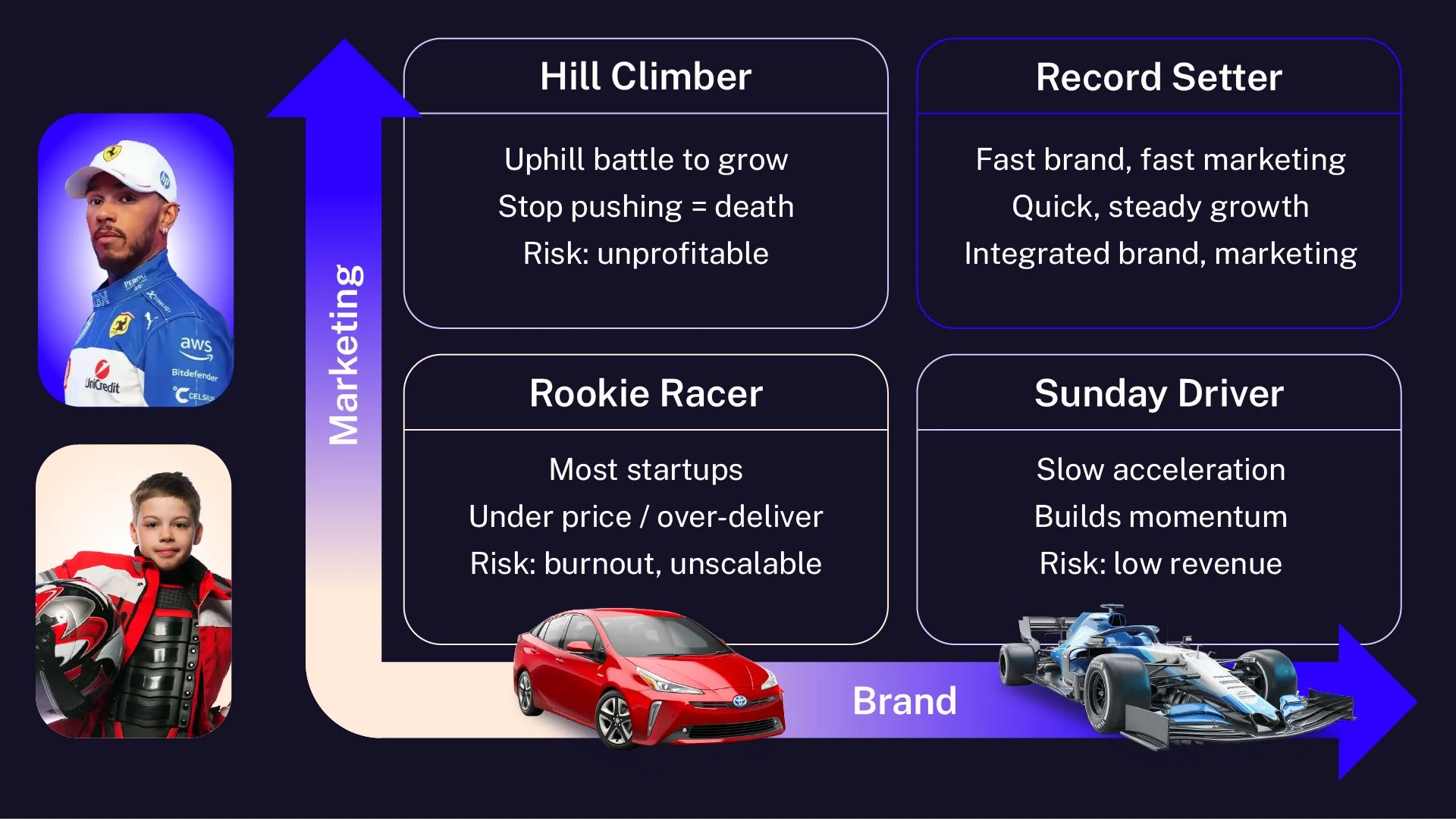
Rookie Racer (slow brand, slow marketing): Most bootstrapped businesses start here, surviving on relationships and underpricing. Without a shift, burnout follows. Most Rookie Racers focus on marketing to survive and become Hill Climbers. If they instead focus on their branding, and neglect marketing, they become Sunday Drivers.
Hill Climber (slow brand, fast marketing): Marketing and sales-driven, with real growth potential. Hill Climbers fight an uphill battle against low loyalty, thin margins, and a business that stalls the moment you stop pushing.
Sunday Driver (fast brand, slow marketing): Strong influence, real advocacy, and the ability to create organic momentum over time. But without customer volume, revenue stays inconsistent and may dry up.
Record Setter (fast brand, fast marketing): The category leader. Brand and marketing are so tightly integrated that the line between them blurs, and the results exceed what either could produce alone.
Most businesses are either Hill Climbers or Sunday Drivers
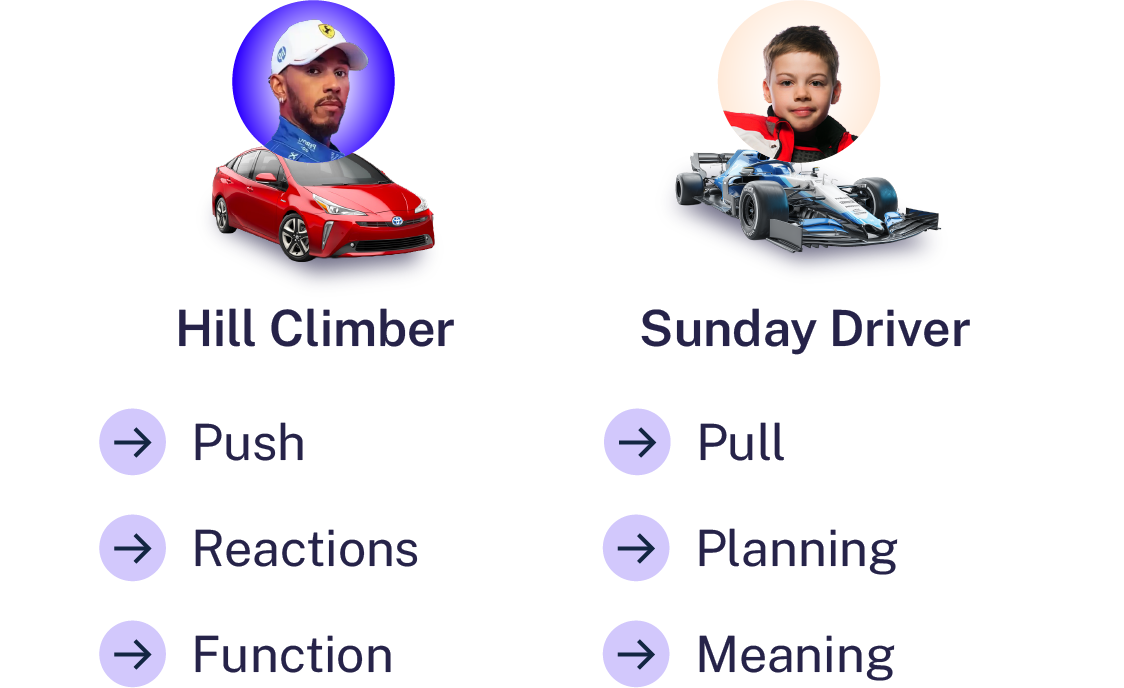
These two positions think about their audience differently. Hill Climbers are push-oriented, focused on reaction time and what their product does. Sunday Drivers are pull-oriented, focused on strategic planning and what their product means to the people who buy it:
Neither is wrong. But both will struggle to outperform a competitor in the top right position, because they're each missing something the other has.
Becoming a Record Setter means understanding what's holding you back
No company starts as a Record Setter. They earn it. For a Hill Climber, that might mean reinvesting some hard-won revenue into brand strategy and identity so your marketing skill has a fast car to drive. For a Sunday Driver, it might mean hiring a talented CMO, committing to the right channels, or accepting some shorter-term growth tactics.
The shift is different for everyone. What's constant is the willingness to fill the gap.
Want to know where you're starting from? Take the Brand Racing Grid quiz to find your grid position and what it takes to move.

Footnotes and Further Reading
Binet, L. and Field, P. — The Long and the Short of It (IPA, 2013). Landmark analysis of nearly 1,000 advertising effectiveness case studies, finding that short-term activation campaigns reliably drive volume but rarely improve pricing power, loyalty, or margins. Read a summary
UserTesting — Brand Loyalty Trends Report (2025). Survey of 4,000 consumers across the US, UK, and Australia. Found that 68% of loyal customers would stay with a brand even if prices increased, and on average are willing to pay 25% more for brands they trust. Read the report
By Aaron Tovi
05/21/26
